


For long-duration crops such as arecanut, coconut, and black pepper, the second feeding of manure and fertilizers in post-monsoon is just as essential as the pre-monsoon application. However, many farmers mainly associate fertilizer and manure application with the beginning of the monsoon. Before the rains arrive, they apply manure and fertilizers, expecting rainwater to help dissolve the nutrients and make them available in the root zone. While this practice is important, the second application after the monsoon is equally crucial for sustaining plant health, supporting the next harvest, and helping crops recover from the stress of prolonged rainfall.
But there is another equally important period that is often neglected—the period immediately after the monsoon.
In high-rainfall areas, the end of the rainy season does not mean the end of the crop’s nutrient requirement. In fact, it is a critical stage when the crop needs nutrition to recover from the stress of continuous rain, rebuild its root system, develop new leaves and support the next crop.
Therefore, pre-monsoon manuring and post-monsoon manuring should not be considered as two alternatives. They are two complementary stages of crop nutrition.
What happens to the soil during the monsoon?
Continuous heavy rainfall can have a major impact on agricultural soil.
Rainwater can wash away fine soil particles and nutrients. On sloping land, soil erosion can remove the fertile topsoil. In poorly drained areas, prolonged waterlogging reduces soil aeration and affects root activity.
The root zone may remain wet for long periods. Under such conditions, roots may become weak, damaged or less efficient in absorbing nutrients.
At the same time, some nutrients can be lost through leaching. Organic matter can also decompose differently depending on soil moisture and aeration.
Therefore, after several months of rain, the soil and the plant may both require attention.
The crop has also spent its reserves:
We should remember that a standing crop does not stop working during the monsoon.
In an arecanut garden, for example, the palm may simultaneously be carrying developing fruits while also producing new leaves and developing the next inflorescence.
That means the plant has more than one demand for nutrients at the same time.
The same principle applies to coconut and pepper.
Coconut continues to produce leaves, roots, flowers and nuts. Pepper vines need nutrition for vegetative growth, flowering, fruit development and recovery from disease and climatic stress.
Thus, when the monsoon ends, the crop cannot simply be left to depend on the nutrients supplied several months earlier.
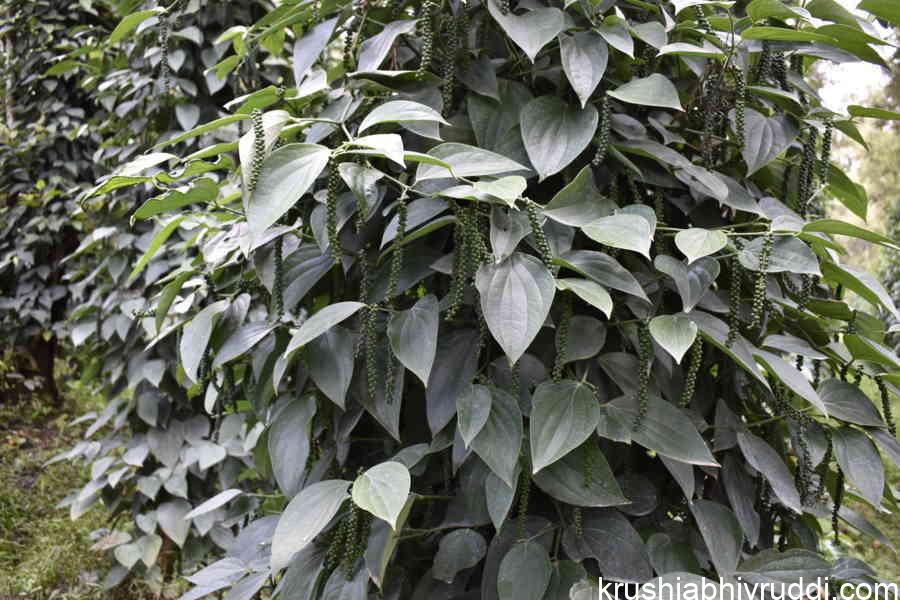
Post-monsoon is a recovery period:
After the rains, plants enter an important transition period.
The soil gradually becomes better aerated. The excessive moisture starts declining, but sufficient moisture may still remain in the soil. This can create a favourable environment for active roots and soil microorganisms.
If nutrients are supplied at this stage, the plant can make better use of them.
This is why post-monsoon manuring can be considered a recovery feeding.
It helps the plant:
- rebuild and strengthen roots,
- produce healthy new leaves,
- restore nutrient reserves,
- support flowering and fruit development,
- maintain healthy vegetative growth,
- prepare for the next crop cycle, and
- recover from prolonged monsoon stress.
Why nutrient uptake can be better at this time:
One major advantage of post-monsoon application is soil moisture.
Immediately after the monsoon, the soil generally contains adequate moisture. When fertilizers and organic manures are placed properly in the active root zone, nutrients can dissolve and become available to roots.
However, this does not mean that simply applying more fertilizer will automatically increase nutrient uptake.
Root health, soil aeration, soil pH, organic matter and moisture balance all determine how effectively a plant can use the nutrients supplied.
Therefore, post-monsoon nutrition should go together with proper drainage and soil management.
Organic manure or chemical fertilizer?
The post-monsoon application does not necessarily mean chemical fertilizer alone.
Farmers can use well-decomposed farmyard manure, compost, vermicompost or other suitable organic manures, along with recommended chemical fertilizers where required.
Organic matter helps improve soil structure, moisture-holding capacity and biological activity. Chemical fertilizers, when applied according to soil and crop requirements, provide nutrients in readily available forms.
The important point is balanced nutrition rather than choosing one source and completely rejecting the other.
Arecanut needs special attention:
Arecanut growers should particularly understand this concept.
At a given time, an arecanut palm may have developing nuts from the present crop while simultaneously preparing the next year’s crop through new leaf and inflorescence development.
Therefore, the plant’s nutrient requirement does not finish with one harvest.
If nutrition is inadequate during this period, the effects may not always be visible immediately. The consequences may appear later as poor fruit development, weak growth, reduced bunch formation or lower yield.
Today’s nutrition can influence tomorrow’s harvest.
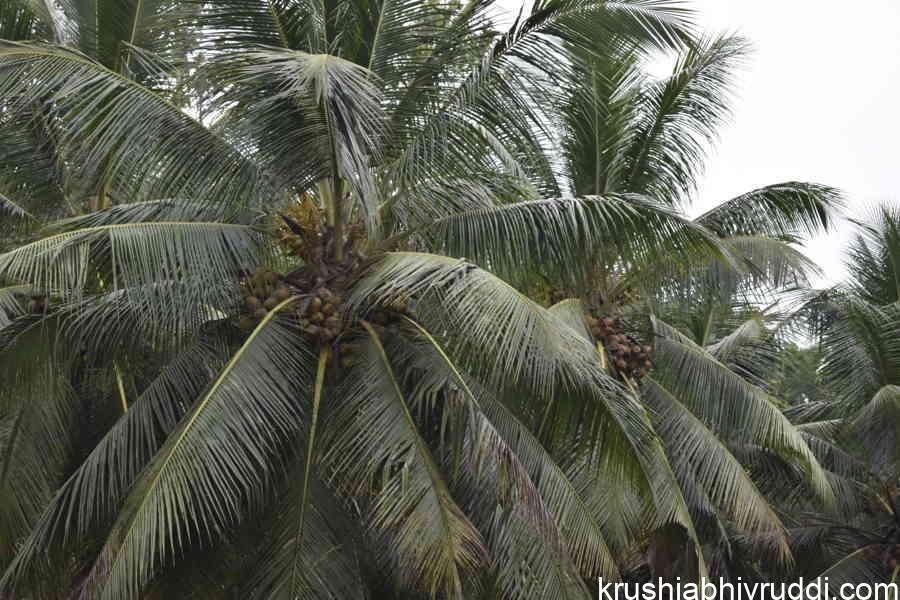
The same principle applies to coconut and pepper:
In coconut, continuous production of leaves, flowers and nuts requires a regular supply of nutrients. A coconut palm is not a seasonal crop that can be fed once and forgotten.
Pepper is also highly responsive to nutrition. After the monsoon, the vine needs to recover from the stresses of heavy rain and disease pressure and prepare for the coming growth and flowering stages.
Therefore, coconut and pepper gardens also benefit from a properly planned post-monsoon nutrient application.
One dose of fertilizer is not necessarily enough:
Many farmers follow a simple practice: one annual dose of manure and fertilizer, usually before the monsoon, and then no further application.
This may not always match the actual nutrient demand of perennial horticultural crops.
The better approach is to divide nutrient application according to crop demand, soil condition, rainfall pattern and the recommended fertilizer schedule.
In high-rainfall regions, splitting the recommended annual nutrient dose can be particularly useful because a single large application may be exposed to greater risk of nutrient loss.
But farmers should not interpret this as a recommendation to simply apply fertilizer twice at the full rate.
The recommended annual quantity should be divided appropriately between applications.
Soil testing, crop age, yield level and local agricultural recommendations should be considered while deciding the exact quantity.
Pre-monsoon and post-monsoon are two sides of crop nutrition:
We can look at the two applications in a simple way:
Pre-monsoon manuring — preparation
It provides nutrients when the rainy season begins and supports the crop through the initial period of active growth.
Post-monsoon manuring — recovery and preparation for the next crop
It helps restore nutrient availability after months of rainfall and supports root recovery, new growth, flowering and fruit development.
One prepares the plant for the monsoon; the other helps the plant recover from it.
Do not forget the soil:
Post-monsoon fertilizer application should not become another routine exercise of simply throwing fertilizer around the palm.
The farmer should first look at the soil.
Has soil erosion occurred?
Are roots exposed?
Is the soil compacted?
Is drainage adequate?
Has organic matter declined?
Are there signs of nutrient deficiency?
Where erosion has removed topsoil, restoring organic matter and soil structure is as important as supplying nutrients.
The fertilizer should also be placed in the active root zone, rather than concentrating it immediately around the trunk.
The real objective is not fertilizer application—it is crop recovery:
The purpose of post-monsoon manuring is not simply to put more fertilizer into the soil.
The real objective is to restore the soil–root–plant system after the stress of the rainy season.
A healthy root system absorbs nutrients. Healthy leaves manufacture food. Adequate nutrition supports flowering and fruit development. Strong plants are also better equipped to tolerate environmental stresses.
Therefore, post-monsoon nutrition is an important part of maintaining the productivity of perennial horticultural crops.
A message to farmers:
For farmers in heavy-rainfall areas, the end of the monsoon should not be seen as the end of crop management.
It should be seen as the beginning of the next phase.
The rain may have washed the soil, stressed the roots and consumed a considerable portion of the plant’s nutrient reserves. At the same time, the plant may already be carrying fruits and preparing the next crop.
This is why after-monsoon manuring deserves the same attention as pre-monsoon manuring.
Do not feed the crop only before the rain. Feed the crop according to its demand after the rain too.
Because the fertilizer applied today is not only for today’s crop—it is also an investment in the next harvest.


